
PLATINUM-IRIDIUM ALLOY WIRE
Platinum-Iridium Wire for Medical Devices
MOOSEN supplies Pt-Ir wire (platinum-iridium wire) for medical device components, including electrode assemblies and guidewire systems. Send your alloy grade, diameter and tolerance so we can review the wire against your drawing.
For prototype and production inquiries.
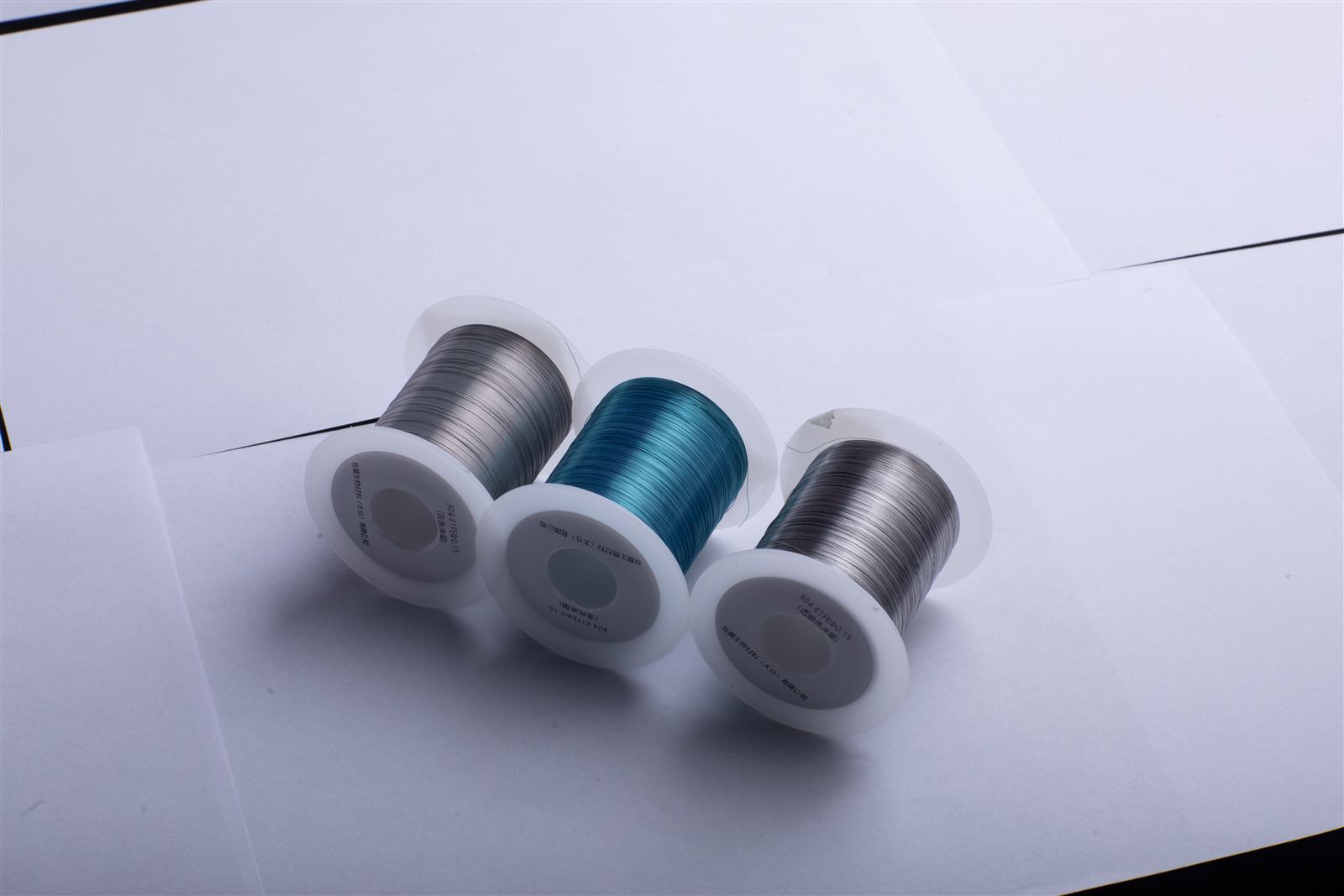
Drawing-Based Supply
Wire dimensions and form follow the approved specification
Pt-Ir Material
Alloy grade and material documentation reviewed per project
Application-Focused
Electrode, guide-wire and connected medical-device programs
Inspection-Defined
Diameter, surface and acceptance criteria agreed before supply
MATERIAL SELECTION
What is Pt-Ir wire?
Pt-Ir wire is drawn from a platinum-iridium alloy. Medical device engineers use it for small conductive components where the metal also needs to be visible under X-ray.
Pt90Ir10 and Pt80Ir20 denote 10% and 20% iridium by mass, respectively. At comparable wire conditions, the higher-iridium grade generally offers greater strength. Compare grades in the condition you plan to order, and confirm availability at your target diameter.
Radiopaque Pt-Ir material
Supports visibility where a compact metallic conductor or guide-wire element must be identified during imaging.
Drawing-defined diameter
Wire diameter, length and permitted variation are controlled against the approved drawing.
Application-oriented condition
Surface, straightness and delivery form are reviewed around the specified assembly process.
Agreed inspection method
Critical dimensions, material records and acceptance criteria are identified before supply.
WIRE SPECIFICATIONS
Pt-Ir wire specifications for your RFQ
Start with the alloy and bare wire diameter. If the wire must pass through a lumen or fit a mating part, share the available clearance and identify any coated sections on the drawing.
| Wire input | What to specify |
|---|---|
| Alloy grade | Specify the Pt/Ir ratio and any material certificate required with the lot. |
| Wire diameter | Nominal diameter, tolerance and measurement method |
| Length or spool | Cut length, straight length, spool length or annual requirement |
| Condition | As-drawn, annealed, stress-relieved or project-defined condition, if available |
| Surface condition | Surface finish, cleaning and cosmetic acceptance requirements |
| Form of supply | Specify a spool or cut length. For cut wire, include the length tolerance and any straightness requirement. |
| Assembly method | Welding, crimping, bonding, swaging or customer-defined process |
| Inspection and packaging | Critical dimensions, reporting, protection and identification requirements |
Send Wire Specifications for Review or view fine wire diameters and tolerances.
MEDICAL DEVICE APPLICATIONS
Platinum-iridium wire for connected medical-device systems
Wire diameter, form and attachment method are defined by the finished device architecture.
Electrode leads
Conductive elements for sensing, stimulation and diagnostic assemblies.
Guide-wire systems
Fine wire elements where controlled geometry and radiopacity are required. For finished-device sourcing, review guidewire types and OEM qualification criteria before specifying the component you need.
Catheter assemblies
Wire elements integrated into catheter and minimally invasive device architectures.
Implantable components
Project-specific conductor and electrode components for customer validation programs.
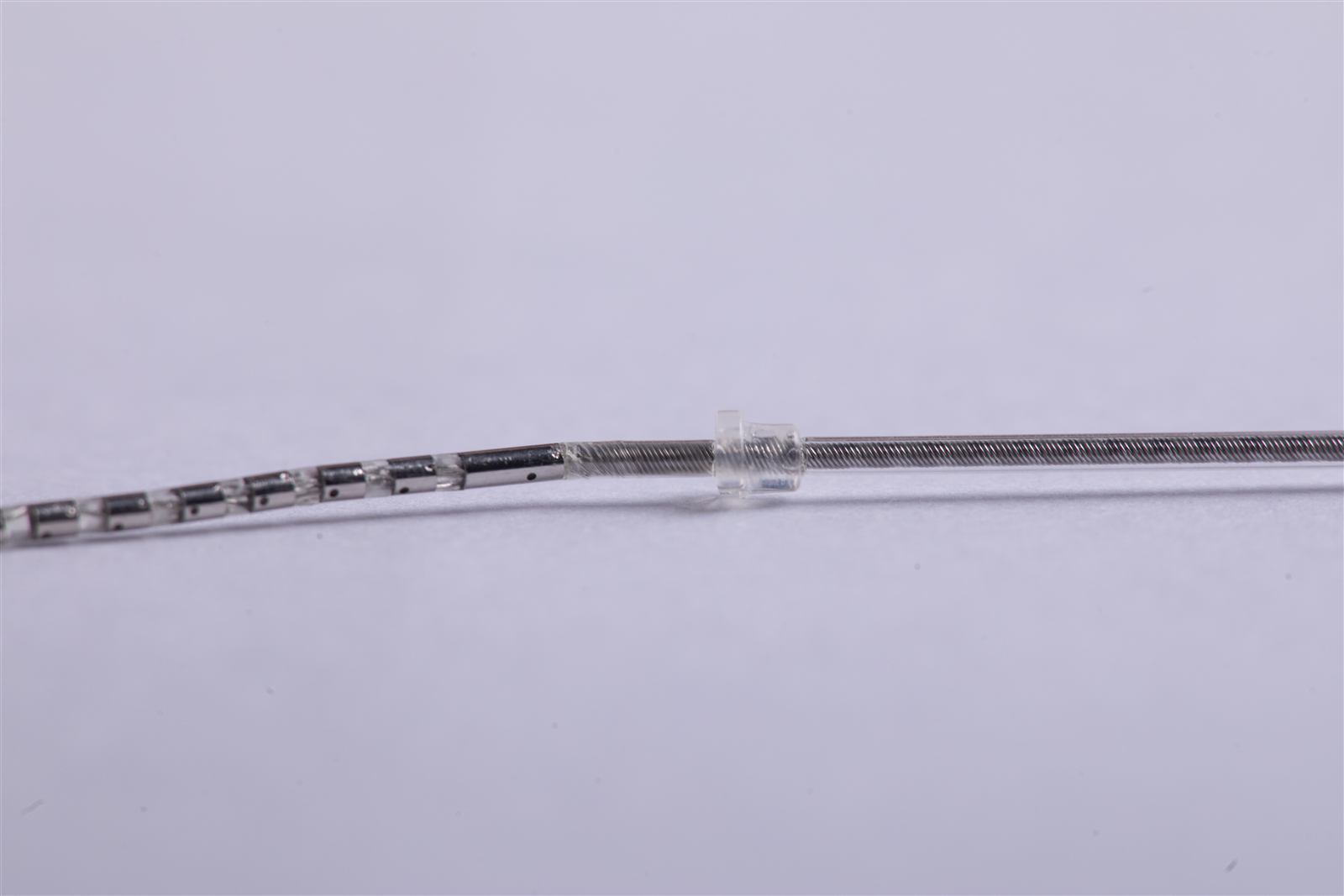
Components shown are supplied for integration into customer-designed medical devices, not as certified finished medical devices.
FROM DRAWING TO CONTROLLED SUPPLY
A practical path from wire specification to repeat production
1. Requirement review
Drawing, grade, diameter, form, application, quantity and documentation.
2. Manufacturability feedback
Geometry, tolerances, surface, condition and measurement methods.
3. Prototype or sample
The agreed supply and inspection approach is applied.
4. Dimensional verification
Critical features are evaluated against the drawing.
5. Production and release
Packaging, identification and documentation follow the agreement.


Select the right component for your assembly
Compare adjacent MOOSEN component forms by function and interface. These are design routes, not interchangeable stock sizes. Final feasibility, dimensions and acceptance are reviewed against your drawing.
| Component route | Choose it when | What to confirm |
|---|---|---|
| Platinum–iridium wire supply | drawing-defined Pt–Ir wire for a medical component program | Use the approved drawing and assembly method as the decision basis. |
| Platinum–iridium medical wire | the device-side medical application needs more detail | Review this component |
| ETFE-coated medical wire | a specified ETFE insulation layer is needed | Review this component |
Prepare a useful RFQ
Please include the current drawing revision and the fields below where available. The contact form accepts a drawing or specification file; prototype quantity, annual volume and required records can be added there.
- alloy grade
- diameter and tolerance
- condition
- spool or cut length
- downstream joining
- inspection and volume
Evidence to agree: material documentation, critical dimensions, visual or electrical checks, sampling and release records as applicable to this component. No universal size, tolerance or performance claim is implied.
Define the Wire at the Point Where It Is Used
Start with the part of the assembly that needs the conductor. A wire that will be joined to a contact needs a clearly defined connection zone. A wire that will be routed through a narrow path needs a diameter that fits the smallest relevant opening. A wire that will be fed from a spool needs a dispatch format that the receiving equipment can handle. These requirements can lead to different purchase specifications for wire described with the same alloy and nominal diameter.
Show the receiving interface on a drawing or provide an assembly cross-section. Identify the portion of the wire that will be joined, handled or constrained. List the required material condition and add any inspection notes that affect that portion. Indicate whether the diameter in your order applies to the bare metal or the finished conductor, especially where insulation or another layer changes the final diameter. If the design calls for insulation, review ETFE-coated medical wire and specify the conductor and coating dimensions separately.
Choose a Supply Form That Matches Assembly
Spools can suit continuous feeding or repeat cutting operations. Ask how usable length, the start and end of a spool, any permitted joints and the lot identifier will be recorded. If a machine has a defined spool format or winding direction, include those requirements with the order. Your team can then compare quotations on the length and handling conditions it will actually receive.
Cut lengths can suit prototype builds, bench handling and assemblies where individual segments are loaded into a fixture. Provide the lengths and tolerances with the wire dimensions, along with a description of the ends if they are relevant to joining or handling. If straightness matters, define the gauge length and how it is checked. A cut-wire requirement can also specify how parts should be grouped and identified for controlled batches. Confirm packaging that lets your receiving team distinguish sizes or lots before the parts enter production.
Specify Diameter, Condition and Surface Together
An outside diameter is useful when it is tied to an acceptance limit and an agreed way to measure it. Consider whether a small allowable variation can be checked in the same setup as the nominal size. If you need readings at several locations or at a designated area, identify those locations. For a very fine wire, discuss how the measurement will be made without bending, marking or otherwise changing the sample. The platinum iridium fine wire page covers additional questions for small-diameter requirements.
The condition of the wire can matter during feeding, forming or joining. Identify any required material state with the approved designation. If a numeric mechanical requirement affects your process, include the applicable test setup or standard so it can be reviewed alongside the size and condition. Where your design calls for a controlled surface, explain the feature that matters to the next operation. Distinguishing the connection region from the remaining wire gives the supplier a more precise basis for assessing surface expectations.
Compare Platinum-Iridium Wire Suppliers on the Same Scope
Ask each platinum-iridium wire supplier to quote the same drawing revision, alloy designation, diameter and supply form. A quotation for an initial sample, a trial quantity and a production order may include different packaging or documentation. Put those quantities on separate lines if they serve different stages. That makes it easier to compare available material and processing routes without assuming that the trial order and recurring production request have the same acceptance process.
Specify the records your receiving team needs and identify which ones belong with each lot. Examples include the purchase part number, material identification and agreed dimensional results. Place these requirements in the request before the sample is inspected. Ask the supplier to identify any items requiring clarification or separate engineering review. The MOOSEN quality information provides a basis for discussing inspection and traceability expectations.
Evaluate Samples Before Moving to a Repeat Order
During sample evaluation, label the wire lot and record the assembly drawing revision. Check the incoming dimensions and material condition, then evaluate how the wire behaves during the intended handling and connection steps. Keep records of the difference between a dimensional issue, an issue at the connection and a change to the assembly process. Results captured this way are easier to use when deciding which fields must be controlled on the released part drawing.
If a trial compares multiple wire configurations, mark the factors that change with each sample. A comparison may vary the diameter, the condition or the supply form. Recording all three makes follow-up discussions more useful than asking for a repeat of an unlabeled sample. For designs that call for a pure platinum conductor, the platinum wire page describes that separate material option. Review material changes against the assembly and its acceptance criteria before ordering.
In your RFQ, identify the one or two decisions you need resolved first. You might need to establish the feasible range for a mating interface, confirm whether a length can be supplied in a particular format, or align the required inspection record with your drawing. Include the contact and conductor assembly details that affect the question. MOOSEN can then assess the request with the necessary context.
FREQUENTLY ASKED QUESTIONS
Pt-Ir wire FAQs
What platinum-iridium wire applications can MOOSEN support?
MOOSEN supplies drawing-defined platinum-iridium wire for electrode leads, guide-wire systems, catheter assemblies and other customer-designed medical-device components.
Can MOOSEN supply platinum-iridium wire to a customer drawing?
Yes. The review can include alloy grade, diameter, length, condition, surface, delivery form and inspection criteria. Final feasibility is confirmed for the design.
What information is needed for a quotation?
Provide alloy grade, wire diameter, tolerance, length or spool requirement, application, quantity, mating dimensions and documentation needs.
Can you provide straight lengths or spool supply?
The required delivery form can be reviewed as straight wire, cut-to-length sections or spool supply according to the project specification.
How do I choose between Pt90Ir10 and Pt80Ir20?
Start with the alloy on your drawing. If you can use either grade, compare them in the required wire condition and check how the wire will be formed or joined. Share those details so MOOSEN can review feasibility.
What documentation can be supplied?
State the required material certification, traceability, dimensional report, inspection record and packaging identification during the RFQ.
Is Pt-Ir wire the same as pure platinum wire?
Pt-Ir wire contains iridium as part of the specified alloy. If your drawing specifies unalloyed platinum, see our pure platinum wire page.
Can material and dimensional records accompany a wire order?
MOOSEN agrees material identification, diameter checks and release records with the buyer before production and supplies the documents listed in the order.
SEND YOUR SPECIFICATION
Request a Pt-Ir wire quote
Send the alloy grade, diameter, length, application, quantity and documentation requirements. MOOSEN will identify the next steps for feasibility and quotation.
Attach a Wire Drawing or Specification
Choose Platinum-iridium wire in the RFQ form. Upload your drawing and list any open requirements for fit, joining or delivery.