
MOOSEN BLOG
How to Specify Platinum Iridium Marker Bands for Medical Devices
Platinum iridium marker bands are miniature metal rings specified as radiopaque reference points in medical device assemblies. For an OEM buyer, the challenge is not simply choosing a metal: the band must match the device drawing, attachment method, inspection plan and documentation requirements. This guide sets out the information that helps MOOSEN assess a custom component request.
What is a platinum iridium marker band?
A marker band is a short tubular component placed at a defined location in a catheter, guidewire or other delivery assembly. Platinum iridium is used when the design calls for a precious-metal marker with radiopacity and a particular balance of material and forming characteristics. The device manufacturer determines the final alloy grade, geometry and finished-device performance requirements.
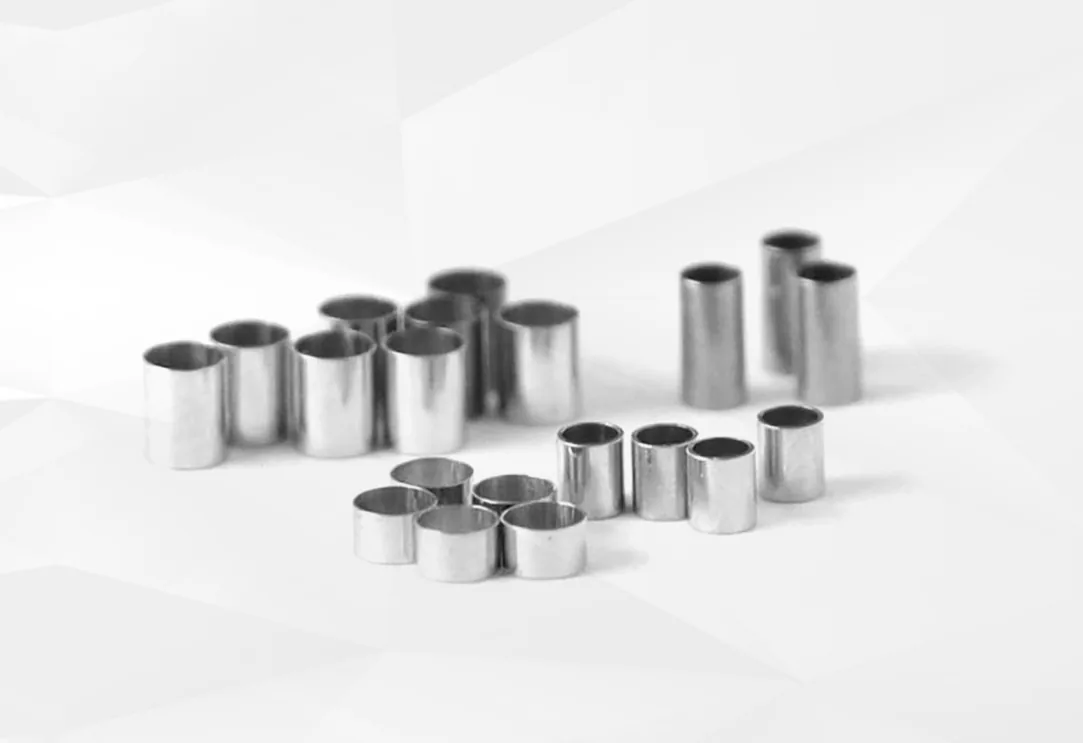
Specifications to define before requesting a quote
There is no useful universal size chart for a drawing-defined component. Send the current drawing revision and identify which features are critical to fit, placement and verification.
| Specification | What the buyer should provide | Why it matters |
|---|---|---|
| Alloy | Approved platinum-iridium grade and material condition | Aligns material procurement and certification with the device specification |
| Outer and inner diameter | Nominal values, tolerances and mating shaft information | Controls fit and position within the assembly |
| Length and wall | Finished band length, wall requirement and tolerances | Affects the part envelope and forming route |
| Edges and surface | Edge condition, finish and cleanliness criteria | Supports handling and the intended attachment process |
| Joining method | Crimping, swaging, bonding or other proposed attachment method | Connects component geometry with assembly needs |
| Inspection and records | Critical dimensions, sampling, traceability and documents required | Defines how a lot will be evaluated and released |
How to select a band configuration
Begin with the marker’s location and purpose in the device. A band for a catheter shaft may have different installation constraints from one used on a guidewire or another delivery component. Check the shaft diameter, available space, desired marker position, neighboring materials and the planned joining process before finalizing the drawing. The finished device maker should validate visibility and system performance in its own design and test program.
Manufacturing and quality questions for a supplier
- Can the supplier review the band drawing together with the mating assembly and attachment process?
- Which dimensions and edge features can be measured on the proposed part geometry?
- What prototype quantity and evaluation records are needed before production release?
- How will the approved material grade, drawing revision and lot records be identified?
- What packaging or handling requirements protect the small parts during shipment?
MOOSEN manufactures drawing-defined platinum-iridium marker components and can align material, miniature geometry, sample evaluation and inspection requirements with the customer’s approved specification. Any numerical capability or release criterion is confirmed for the actual drawing and order.
Marker bands, rings and discs: which geometry fits?
These names can overlap in supplier catalogs, so the drawing is the deciding reference. A marker band is typically a short tubular form. A marker ring may be specified for a similar annular interface or an electrode-contact function. A marker disc is a different, flatter geometry. Compare the actual OD, ID, length or thickness, edge condition and installation method instead of relying on the name alone.
Procurement checklist
- Current controlled drawing and revision
- Application and location within the device assembly
- Approved Pt-Ir alloy grade and material documentation
- Critical dimensions, tolerances and edge requirements
- Attachment method and mating component details
- Prototype quantity, forecast annual volume and target schedule
- Inspection, traceability, packaging and release-record requirements
Frequently asked questions
Can MOOSEN make a marker band to our drawing?
MOOSEN supports drawing-defined platinum-iridium marker bands. Send the current revision, target alloy, mating dimensions and required inspection scope for a feasibility and quotation review.
Do you publish standard OD and wall-thickness ranges?
Final dimensions depend on the alloy condition, geometry and joining method. MOOSEN confirms manufacturability and inspection against the submitted drawing rather than presenting an unqualified universal range.
Can you provide prototype parts before volume orders?
Prototype needs can be included in the RFQ. Specify the evaluation quantity, key dimensions and acceptance checks so the sample plan matches the device program.
What documents should we request?
State the material certificate, dimensional report, lot traceability and any other required records in the RFQ. The available package is agreed for the component order.
Send your marker band specification
MOOSEN can review the component drawing and required documentation for your medical device program. Request a marker band quotation or email maxxun@moosenmat.com with the details above.